
When Sydney’s Streets Become a Marathon Course
How connected digital signage helped support the complex road and kerbside changes behind one of Sydney’s biggest events.
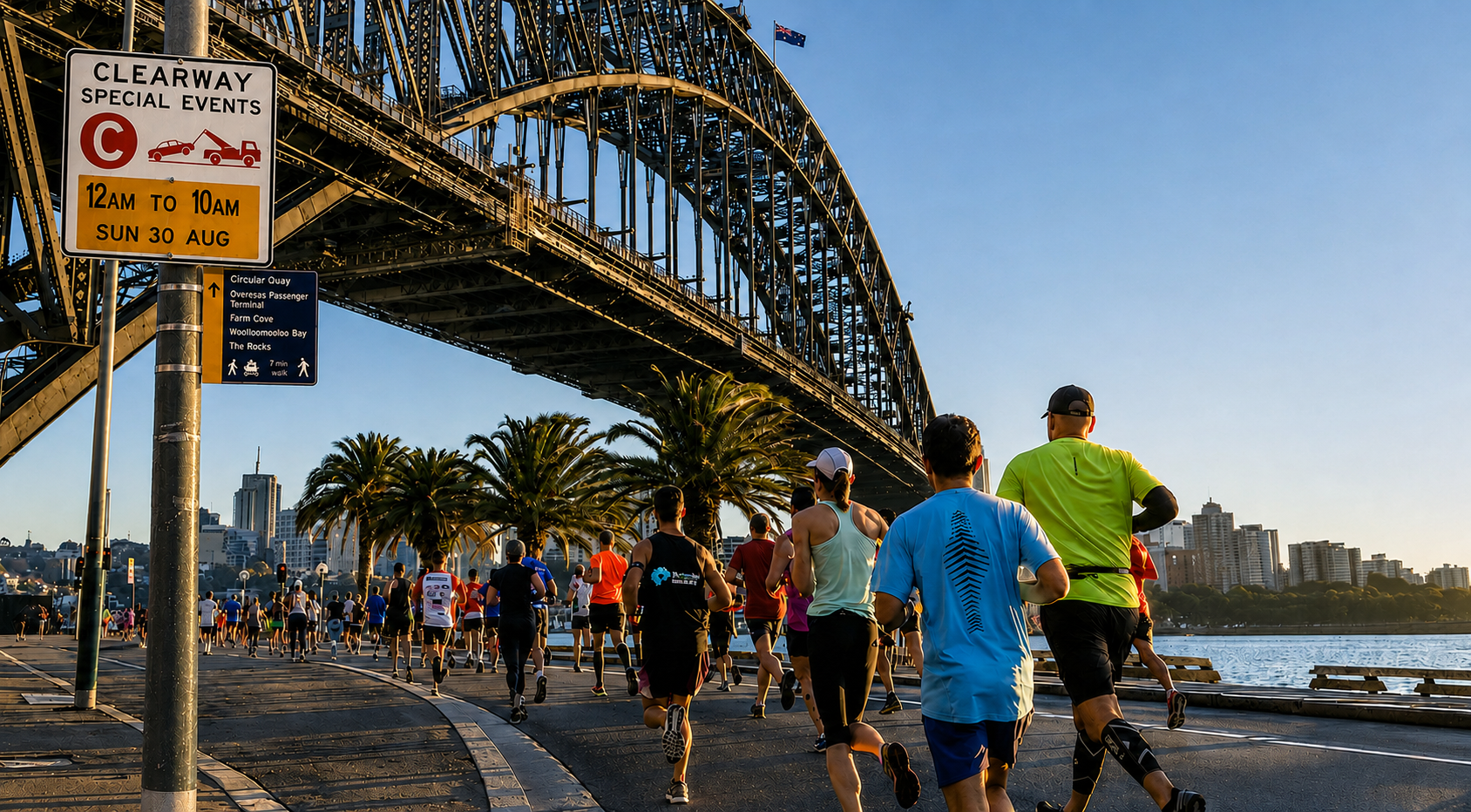
For most people, marathon morning starts when the runners arrive.
For the people responsible for keeping a city moving, it starts much earlier.
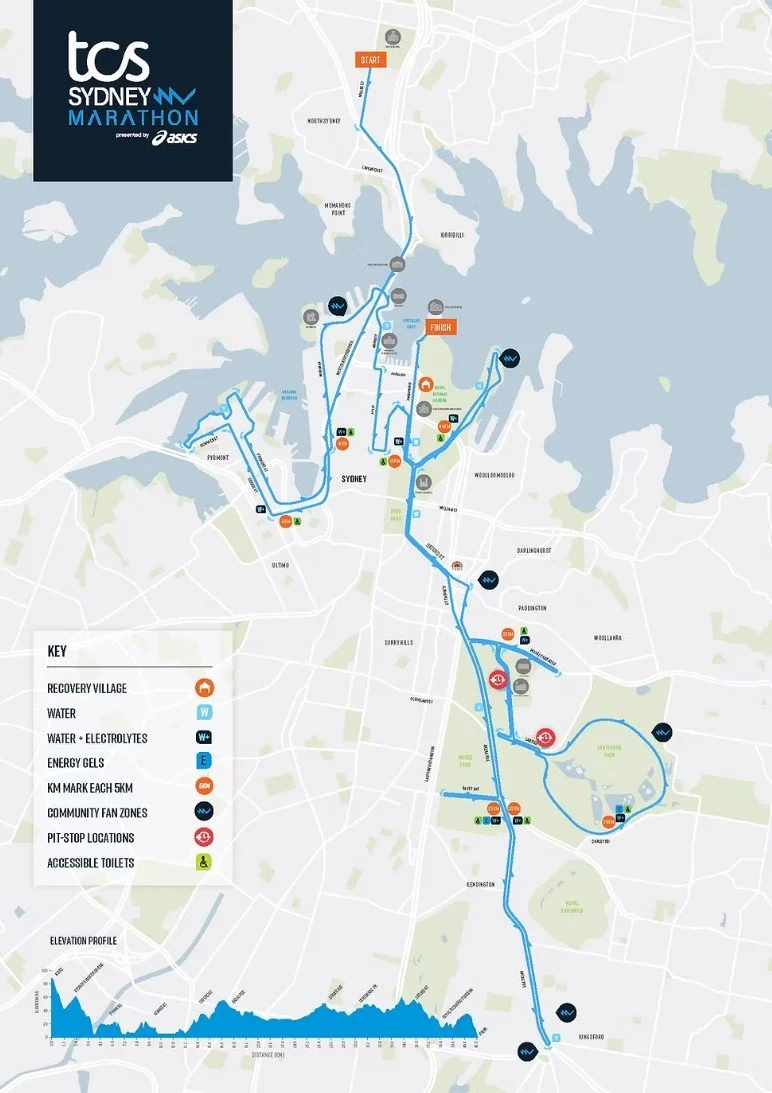
On Sunday 30 August, more than 40,000 runners took to the streets for the 2026 TCS Sydney Marathon, travelling 42.195 kilometres from North Sydney, across the Sydney Harbour Bridge and through the city before finishing at one of the world’s most recognisable finish lines, the Sydney Opera House.
As part of the Abbott World Marathon Majors, the event has grown into a truly international fixture, with the organisers reporting participants from more than 140 countries in 2026.
But transforming Sydney into a marathon course for a day requires far more than barriers, timing mats and a start line.
It requires the city itself to temporarily change.
A city operating differently for a day
Hours before the first runners set off, an extensive traffic-management operation was already underway.
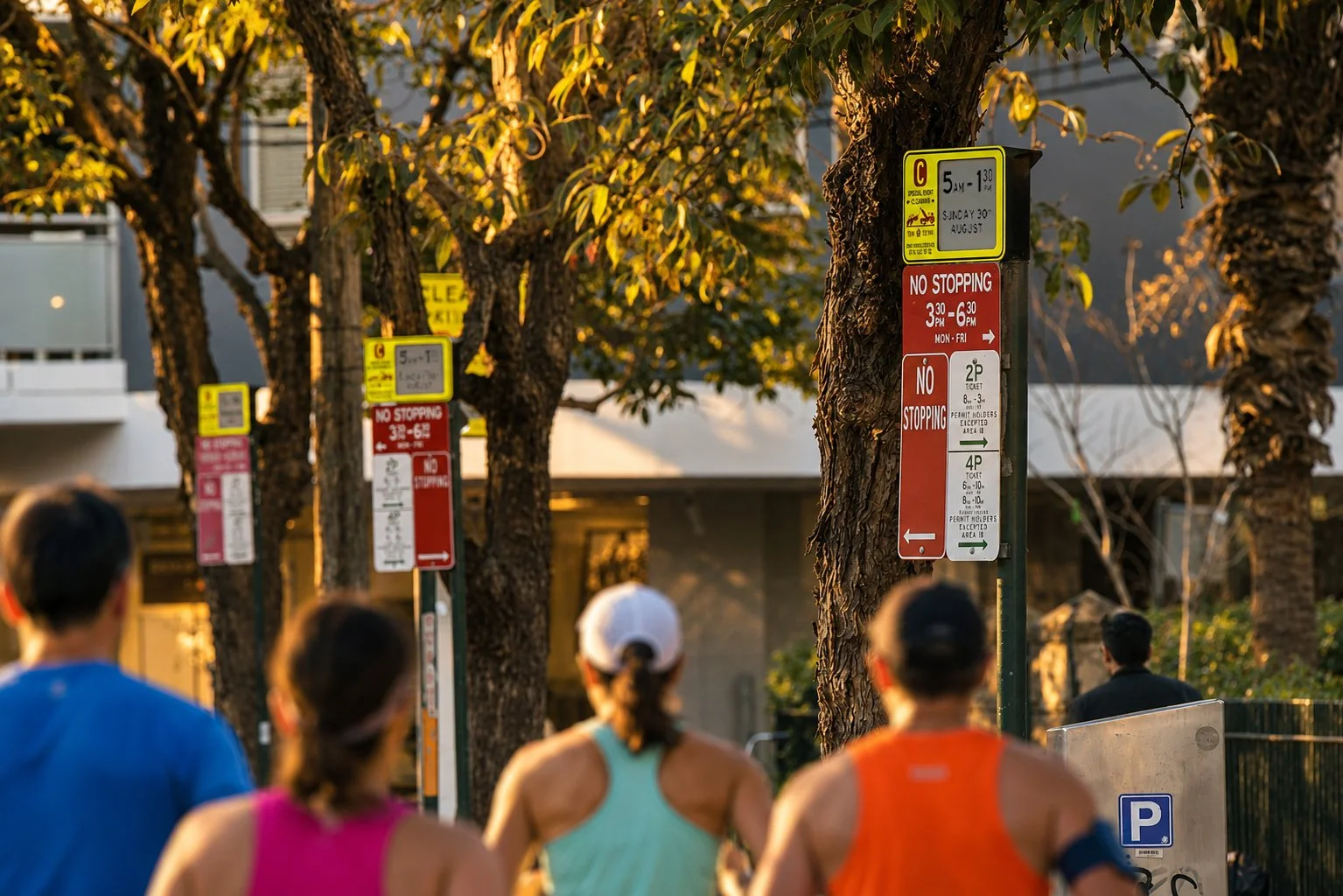
Major roads across North Sydney, the Sydney CBD, Pyrmont, Darlinghurst, Moore Park, Centennial Park and Kingsford were closed or operating differently. The Sydney Harbour Bridge, Cahill Expressway and Western Distributor were closed for several hours, while special-event clearways were introduced along and around sections of the course.
Centennial Park closed all roads and vehicle gates for the day, while Driver Avenue and sections of Anzac Parade around Moore Park were closed from early morning into the afternoon. Bus routes and light rail services were also modified as the transport network adapted around the event.
This is what makes events such as the Sydney Marathon particularly interesting from an infrastructure perspective.
A road that functions normally on Saturday may become part of a racecourse on Sunday. A parking space may need to become a special-event clearway. Loading, parking and access conditions need to change and motorists need to understand those changes before they reach the affected area.
For a few hours, the kerb itself becomes dynamic infrastructure.
160 digital signs helping support the change
With more than 160 Mercury Innovation eMinor digital parking signs formed part of the road-management infrastructure supporting the event.
Designed for changing parking and Special Event Clearway conditions, the connected ePaper signs allow information to be updated remotely rather than physically changed in the field.
Solar-powered and highly readable in direct sunlight, the signs provide transport operators with a practical way to manage changing kerbside conditions across a large event network.
Fewer roadside changes, greater operational control
For major events, temporary parking restrictions can involve significant field activity before and after the event.
Connected signage reduces the need for repeated roadside sign changes by allowing updates to be scheduled and managed remotely.
Across a large network, this means greater operational control, reduced field activity and a simpler way to return locations to normal conditions once the event is over.
Major events are also kerbside events
There is a broader lesson in Sunday's marathon.
Cities increasingly need infrastructure that can perform more than one role.
The same piece of kerb may provide everyday parking today, become a clearway tomorrow, support event operations on the weekend and return to normal conditions once the event has finished.
Major sporting events make this particularly visible, but the same challenge exists around stadiums, concert precincts, construction zones, loading areas and other parts of the city where conditions change regularly.
Static infrastructure assumes that the rules remain static.
Modern cities increasingly don't.
Connected kerbside infrastructure allows transport operators to respond to that reality communicating the condition that applies now, rather than asking motorists to interpret layers of permanent and temporary information.
Infrastructure you don't necessarily notice
For most of the runners crossing the Sydney Harbour Bridge on Sunday morning, digital parking signage was probably the last thing on their minds, and perhaps that's the point.
When transport infrastructure works well, people often don't notice the technology behind it.
They see a clear instruction. They understand where they can and cannot park.
Roads are ready when they need to close. The city changes for the event and changes back again afterwards.
Behind one of Australia's biggest running events were thousands of people, multiple agencies and an enormous transport-management effort.
Mercury Innovation is proud that more than 160 of our Australian manufactured eMinor signs played their part in helping Sydney make that transition.